


How I Fixed a Broken Chair by Replacing the Springs with Chair Webbing
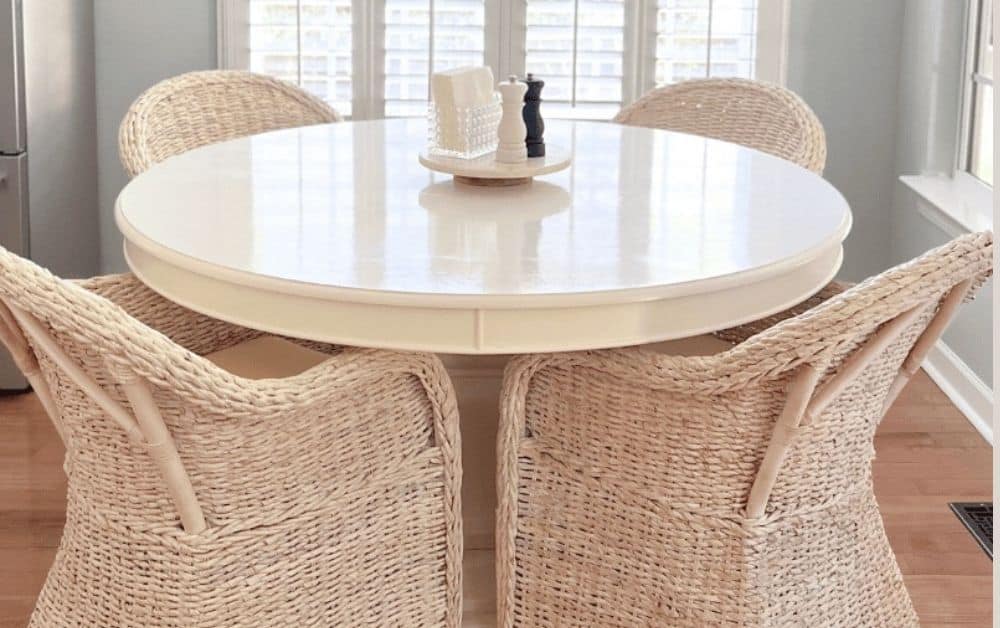
This chair had been getting worse for a while. A bent spring, lopsided seat, unstable, and honestly annoying to sit in. I knew I didn’t want to mess with rebuilding the springs. I’ve tried that before, and between the tension and the sharp metal, it’s way too easy to hurt yourself. After a little bit of research, I found out that you can swap out the springs for chair webbing. Upholstery webbing is the strong woven material that stretches across the frame of a chair or sofa to support the seat. Replacing the springs for chair webbing turned out to be a surprisingly quick and simple way to fix a broken chair.

What Was Actually Broken
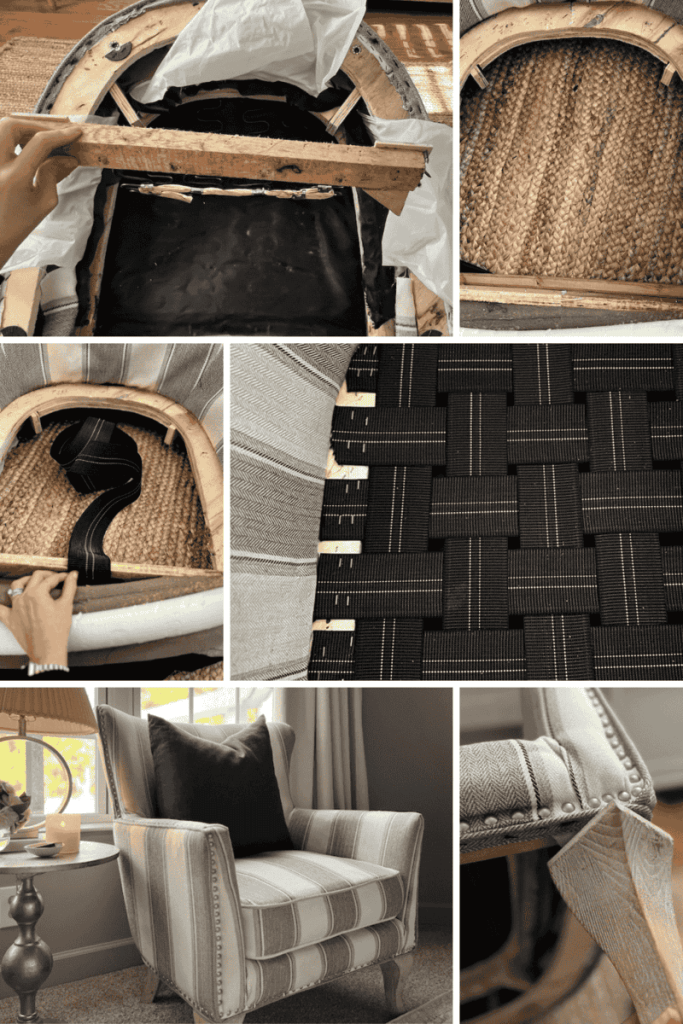
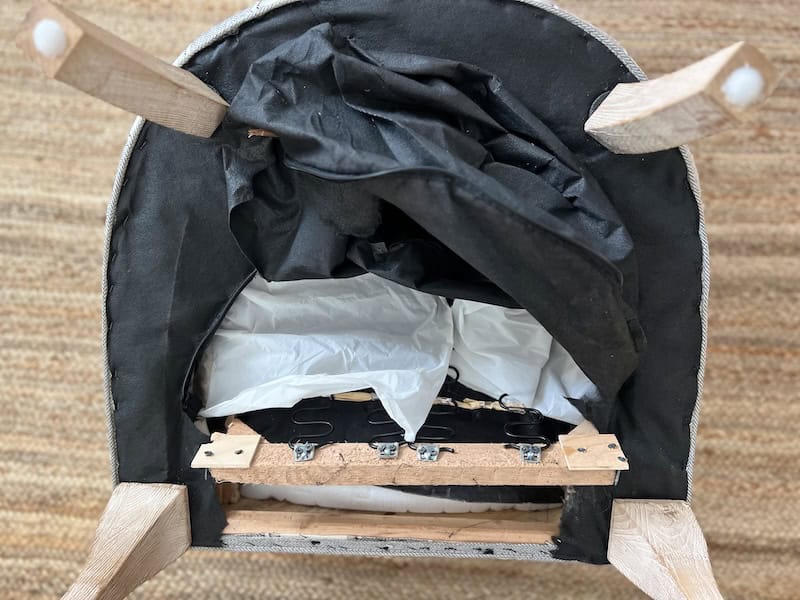
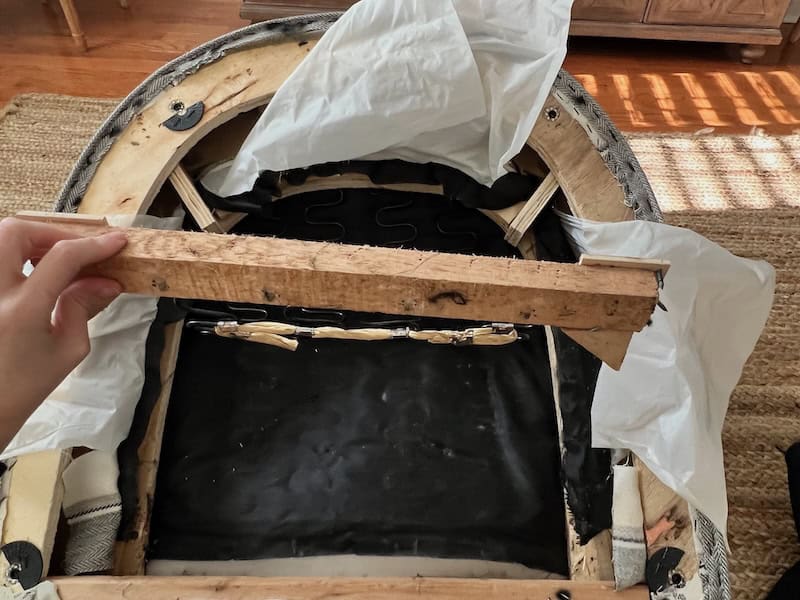
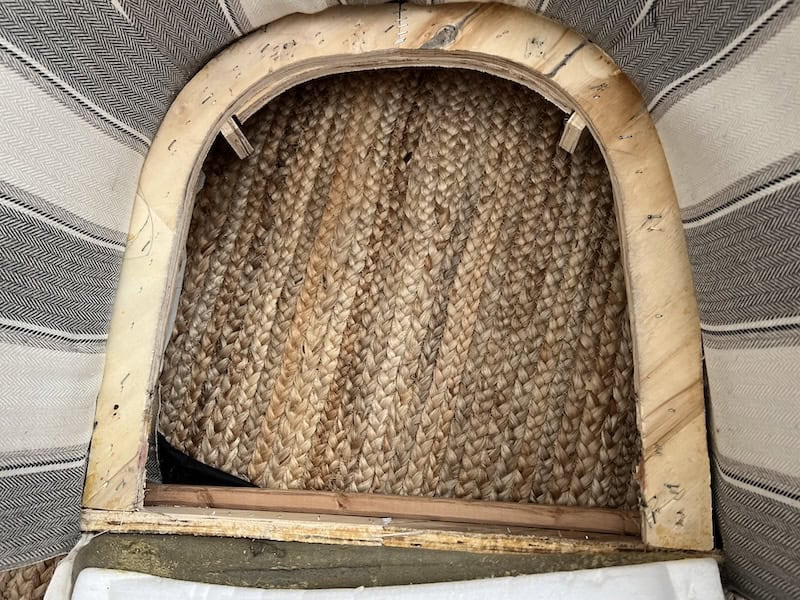
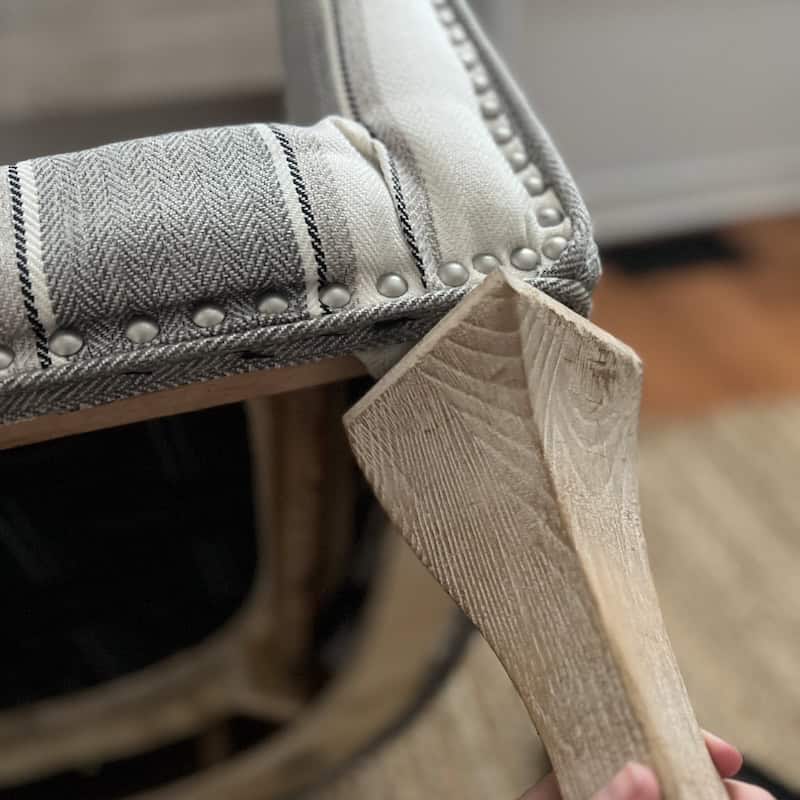
Once I removed the fabric on the bottom, I found a snapped support board. The springs were still there, but one end had been tacked to the seat with a flimsy piece of plywood. So not very sturdy in the first place.
The padding and top fabric were still in good shape, which meant I didn’t need to reupholster the whole chair—just fix what was underneath.
Disclaimer: This page may contain affiliate links. If you click on one of these links and make a purchase, I may receive a small commission at no extra cost to you. I only recommend products and services that I believe will add value to my readers. See our full Affiliate Disclosure at this link.
If you’re already fixing one chair, you’ll probably end up with more ideas of things to fix—this is the same process I’ve used in other furniture projects too
What You Actually Need (and What Matters Most)
I’ve tried a few different ways to fix chairs, and this is what actually worked long term:
If you’re only buying one thing for this project, make it the staple gun—it makes everything else easier. Check out my tool buying guides here.
Staple Gun (don’t skip this)
What I used
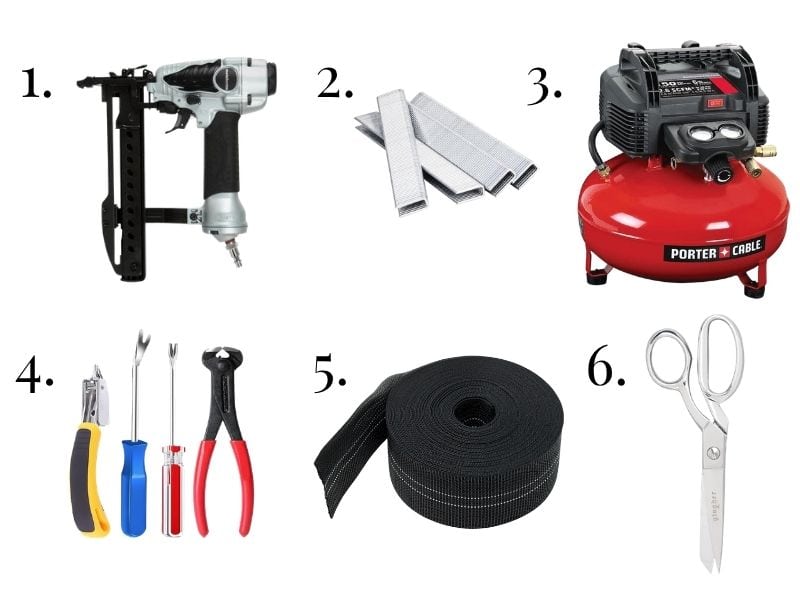
1. Heavy-duty staple gun (& 3. compressor)
This is the one tool that makes or breaks the project. A weak staple gun won’t drive staples deep enough into hardwood, and you’ll end up fighting it the whole time.
Staples (½” worked best for me)
What I used:
2. Meite 18 Gauge for 1/4-Inch Crown 1/2-Inch Length Staples
Long enough to hold, but not so long that they come through the frame. These penetrate the fabric cleanly without tearing (less jamming). And the 1/4 crown makes a minimal hole.
Pliers & screwdriver
What I used:
4. Upholstery Staple and Nail Remover Set
This made a huge difference. Pulling out old staples without it is slow and honestly pretty rough on your fingers. This tool gets under them quickly and saves you a lot of frustration. It also works for removing carpets. (see how we replaced the carpet on on our stairs with wood)
Upholstery Webbing
What I used:
5. Elastic upholstery webbing
The 10% stretch provides just the right tension, and those staples hold it securely . One roll of webbing was more than enough. I fixed two chairs and still had some left over. It’s also weather-resistant so it can be on outdoor furniture.
Scissors or a utility knife
What I used:
6. Gingher Scissors Knife-Edge Dressmaker Shears 7″This is one of those tools that actually lasts—people keep these for decades—so if you’re going to invest in anything beyond the basics, this is worth it. They cut through fabric so cleanly, they have nice weight and the bent handle makes it easier to keep your cuts straight, especially when you’re working on something larger like a seat.
Webbing vs Springs (What’s Actually Better?)
- Springs = more bounce, harder to fix
- Webbing = easier, quieter, cheaper
How to Fix Broken Chair Springs
Step 1: Remove the Springs
I flipped the chair over and removed all the staples holding the seat fabric in place. Using a hammer, screwdriver, and pliers, I pulled out the metal clips and springs.
Once the springs were out, I had a clean wood frame to work with—and honestly, it was way easier than trying to wrestle broken coils back into place.
Step 2: Clean Up the Frame
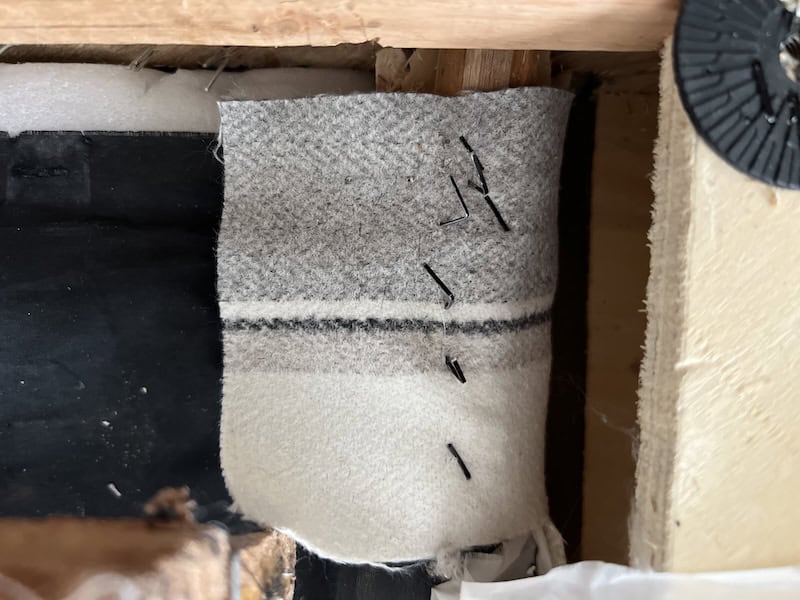
I pulled out any loose staples and checked that the wood frame was still solid. If anything had been loose, I would’ve glued or screwed it first—but mine was still sturdy.
Step 3: Replace Chair Springs With Webbing
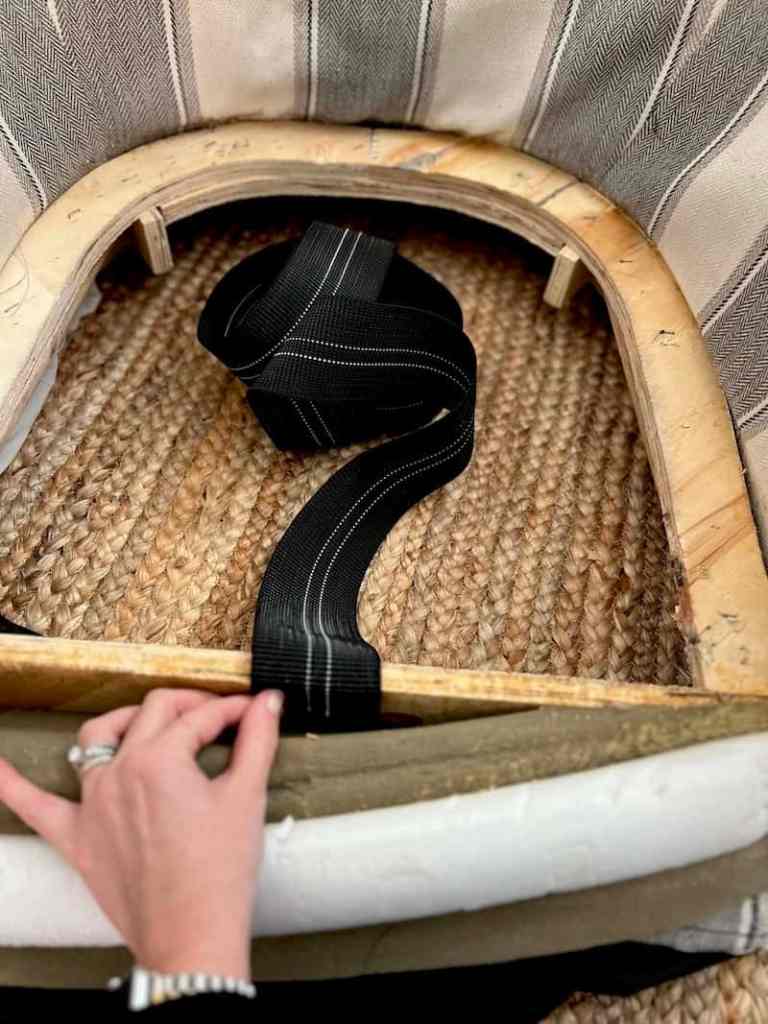
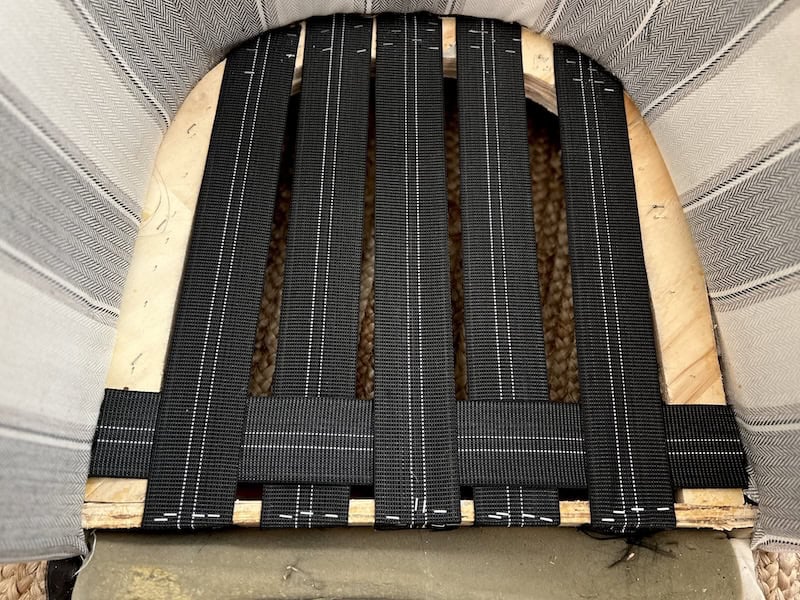
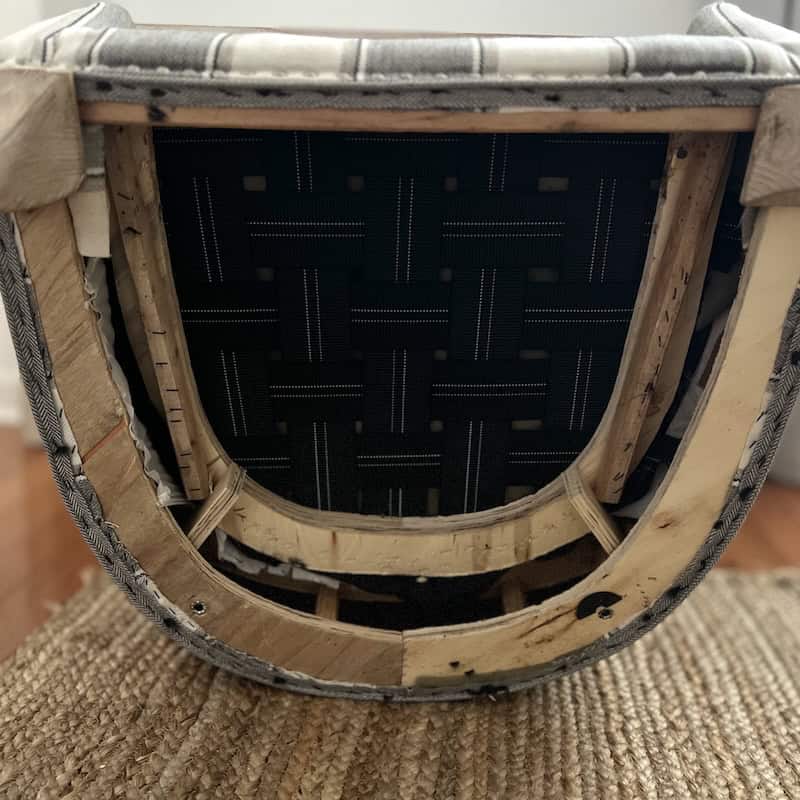
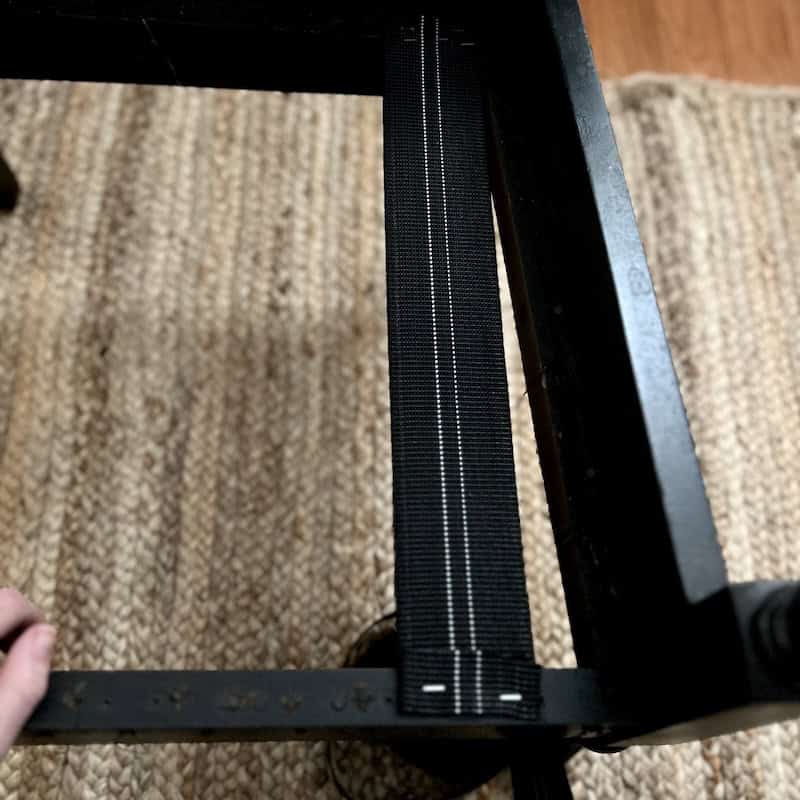
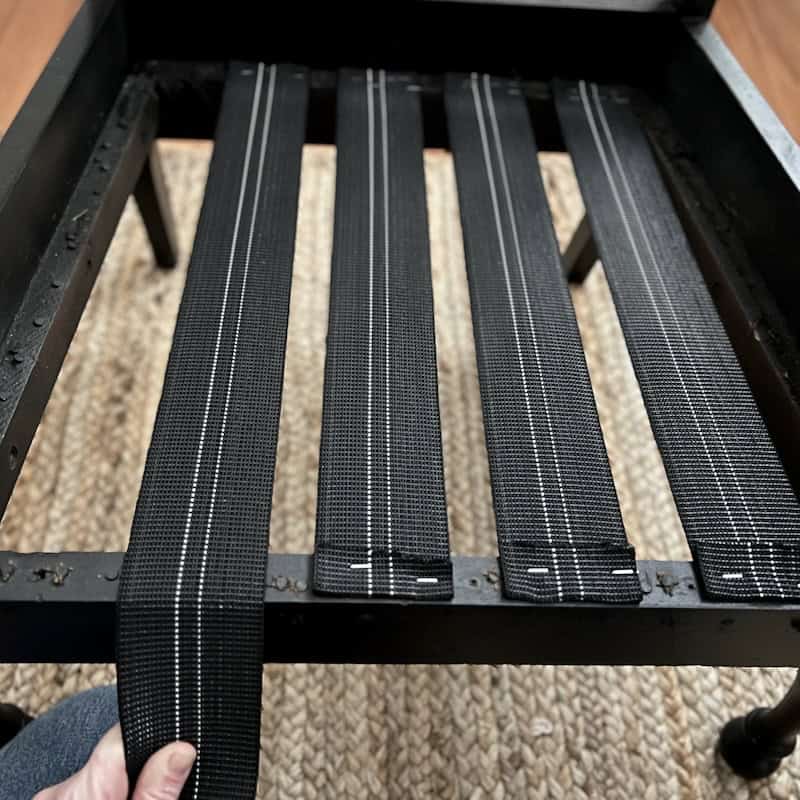
I started by running webbing strips from the front of the seat to the back. Think of it like creating a grid, tight enough to support weight, but not overlapping at first. You will weave the strips side-t0-side after you staple to the front-to-back strips.
- First, I stapled the end closest to the seat back (about 4–5 staples).
- Then I pulled the strip tight—firm, not stretched like a trampoline—and stapled it in place.
- I wrapped the loose end around the front of the chair and stapled again.
- I used 5 strips, spaced about ½” apart.
The goal is a strong base with no big gaps that could sag later.
Step 4: Add the Second Layer (Side to Side)
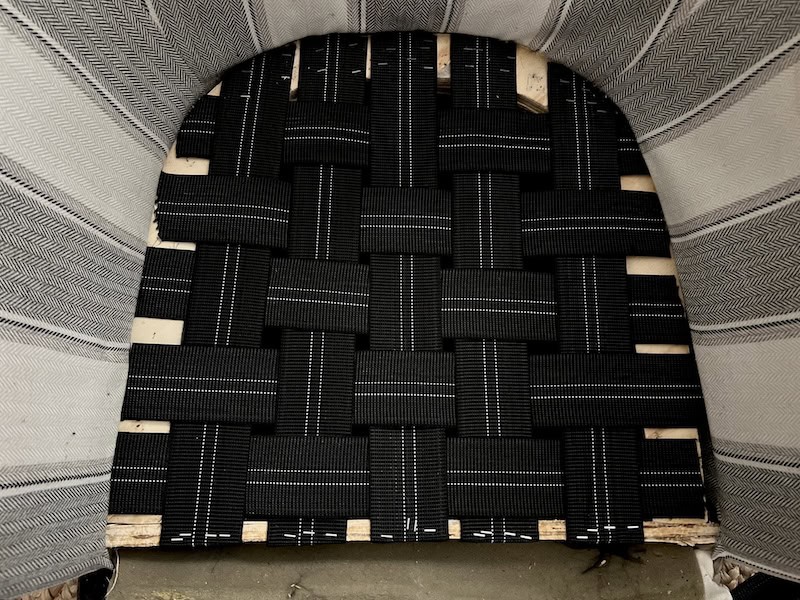
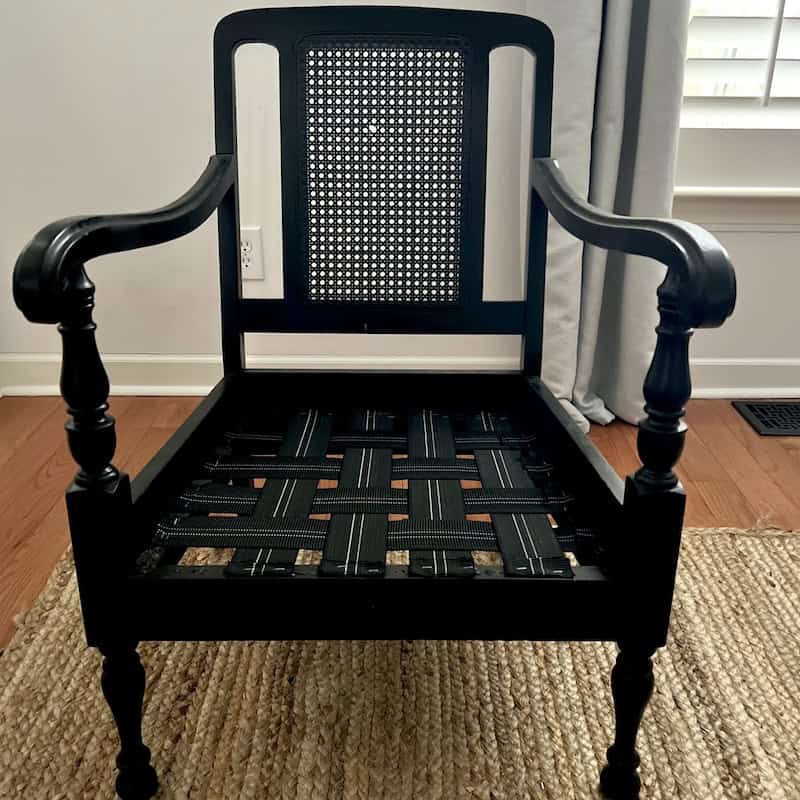
Next, I ran webbing side to side over the first layer to create a grid.
- Stapled one end, then pulled it tight from underneath
- Same tension: tight, not overstretched
- Again, 5 strips across
This grid replaces what the springs used to do.
Step 5: Test It Before Closing
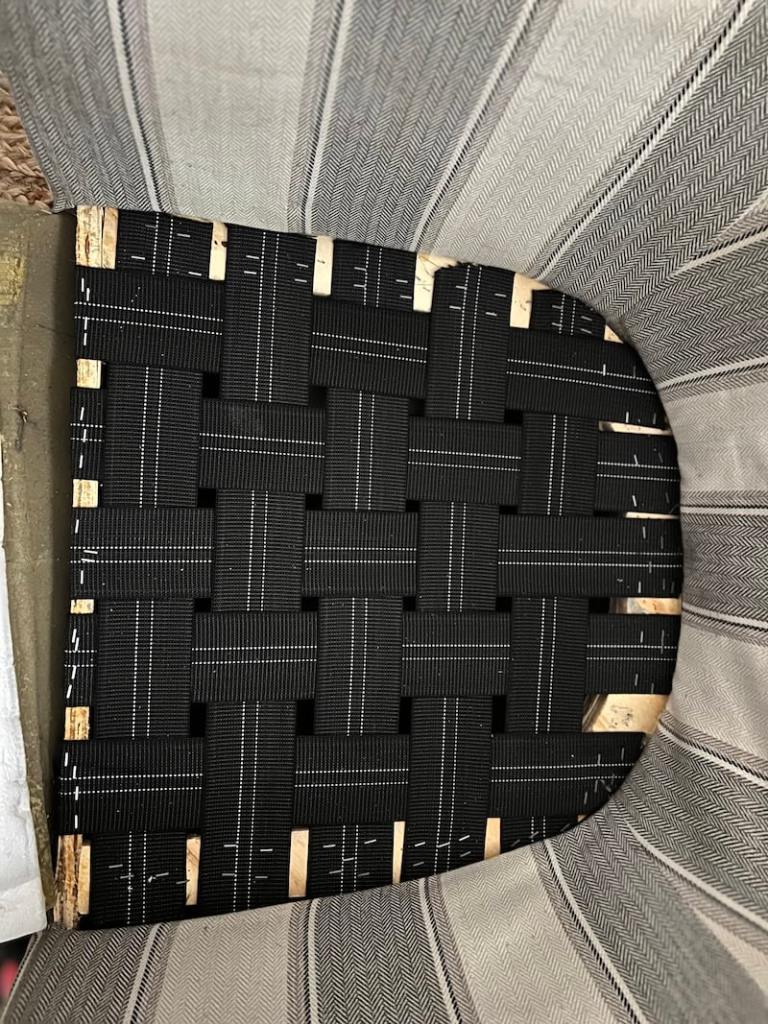
Before stapling everything back:
- I tucked the fabric back into place
- Put the legs back on
- Replaced the cushion
- Sat on it
- Checked it against the matching chair
If it dips more than about an inch in the center, it needs more webbing. Mine felt firm and even, so I left it.
Step 6: Close It Up
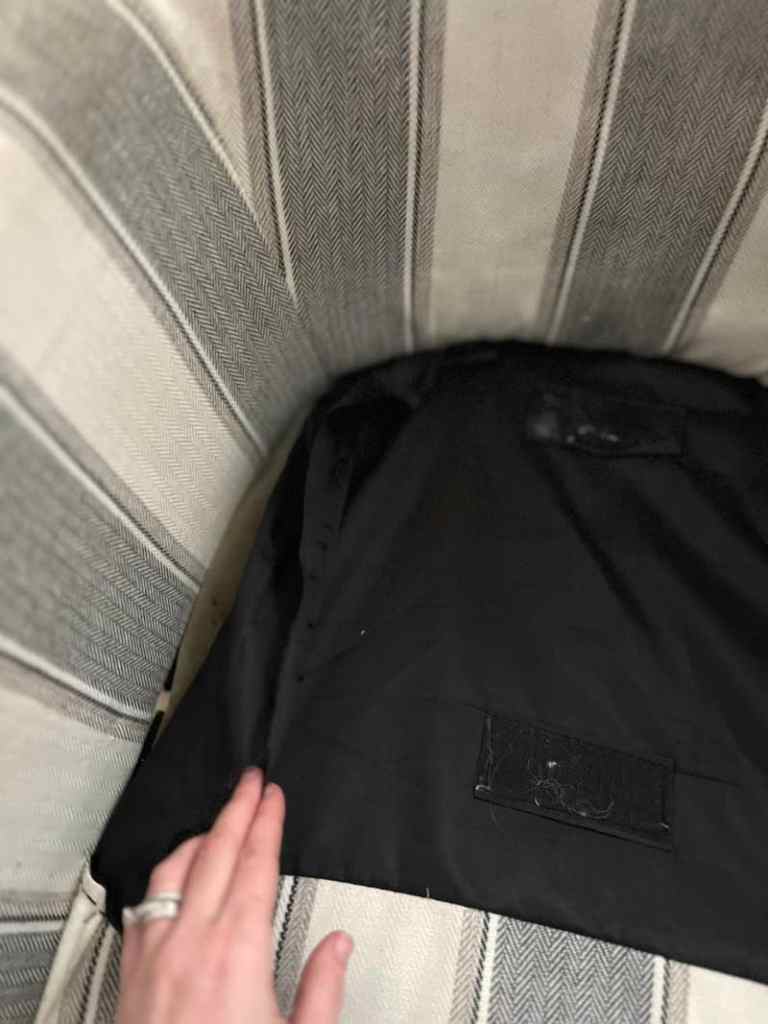
Once I was happy with the support, I stapled the dust cover back on and trimmed any loose fabric.
That was it.
What It Feels Like Now
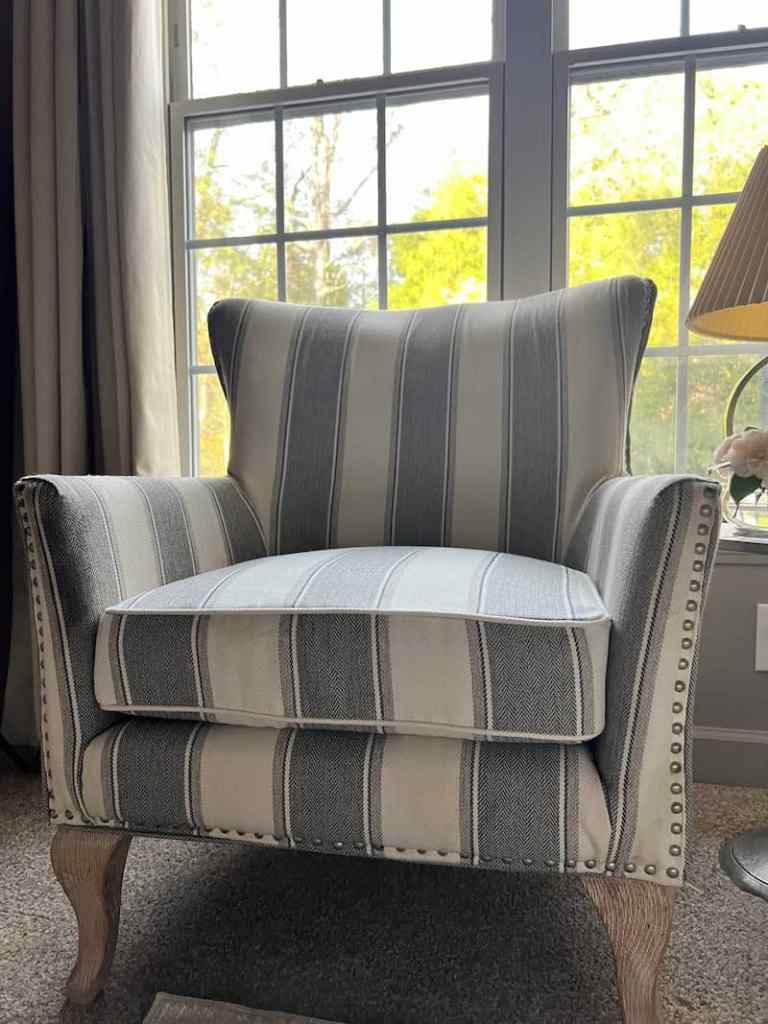
It’s more comfortable than it was with springs. There’s no bounce—but it’s solid, supportive, and doesn’t sag.
It feels almost exactly the same height as the other chair, which is exactly what I wanted for this space.

Would I Do It This Way Again?
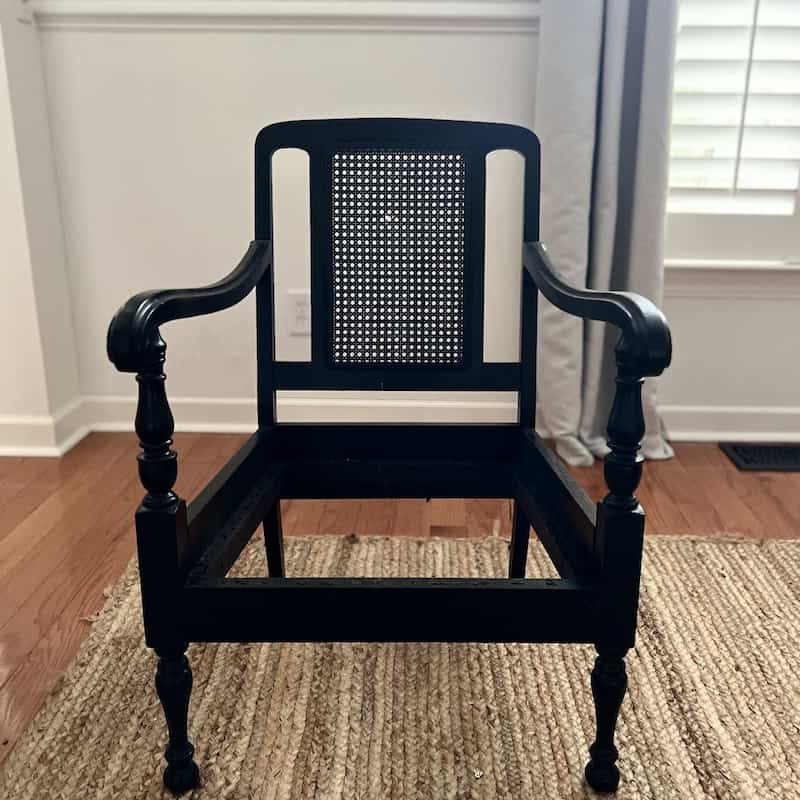
Absolutely—and I already did. Right after this chair, I fixed an antique cane-back chair on my front porch using the same method. I just had to fold the front ends of the webbing neatly since they were visible.
Pros:
- Cheap and simple
- Quick
- No metal to fail later
- Quiet—no squeaks
- Strong and supportive
Cons:
- None so far
Final Take
If you have a chair sitting in your house that no one wants to sit in—this is the easiest fix I’ve found.
And once you do one, you’ll start looking for more to fix. Removing the springs and replacing them with upholstery webbing is a simple way to make it solid again.
It’s not traditional upholstery.
But it works—and sometimes that’s the only goal that matters.

FAQ: Reupholstering Chairs | Replacing Springs with Webbing
You can—but it’s way harder than it looks. Between special clips, tensioning tools, and wrestling heavy springs, it’s easy to make it worse or unsafe. After trying it myself, I’d say spring repair is better left to professionals unless you’re fully set up for upholstery work.
Upholstery webbing is easier to install, quieter, and more budget-friendly than springs, which makes it a great option for most DIY repairs. Springs have more bounce, but they’re harder to replace and usually require more tools and experience.u003cbru003eIf your goal is to fix a sagging chair quickly and actually use it every day, webbing is the simpler and more practical option.
Yes. Upholstery webbing can fully replace springs and create a firm, supportive seat without metal components.
Natural fibers like jute or cotton give a firmer feel. Nylon and polyester are stronger and will last longer, especially outdoors. Elastic webbing is more flexible and comfortable, which is why I used it. The right choice really comes down to the style of the chair, how much support you want, and whether it’s for indoor or outdoor use.
No. It helps, but I just pulled the webbing tight by hand and stapled it in place. For elastic webbing you would use a stretcher with clamps, for traditional jute webbing you would use one with teeth.
Staple one end first, then pull the webbing tight and staple the other end. If it feels too soft after testing, add another strip or replace the loose one.
Some More Quick Diy’s



Something went wrong. Please refresh the page and/or try again.

















Leave a Reply