The typical cost to replace carpet with hardwood in 2025 ranges from $8 to $21 per sq. ft. installed, depending on materials and labor.
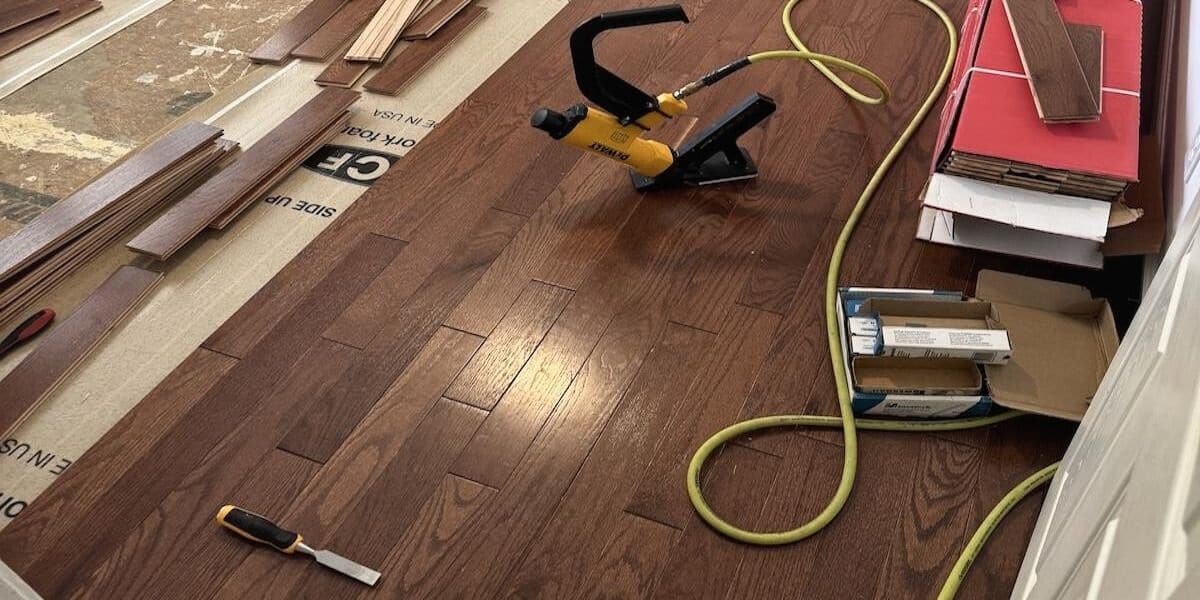
For our DIY project, we installed 143 sq. ft. of solid oak for under $1,000 including tool rental and supplies.
Below, I break down our exact costs, the materials we used, how long it took, and what to expect if you hire it out vs. DIY.

After a late-night water incident (the kind I’d rather not relive), we found ourselves ripping up carpet at 9 p.m. Armed with a utility knife and a lot of frustration, the carpet was up and in the garbage in under an hour and a half. That moment kicked off a full flooring renovation that took just three days from start to finish — and it completely changed the feel of the room.

The Flooring We Chose
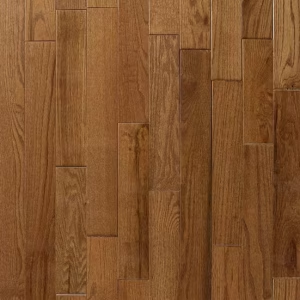
For this 143-square-foot room, we used American Spirit Saddle Red Oak Smooth Solid Hardwood from Floor & Decor in the 3/4″ x 3 1/4″ size to match our home’s existing hardwood. Despite the name, this red oak isn’t red — it’s a beautiful neutral brown tone that’s close to Minwax Provincial.


Each plank has an average length of 24 inches and a maximum length of 84 inches, and because it’s 3/4″ solid wood, it can be refinished up to two times over its lifetime.
We paired it with Eco Cork Foam Underlayment from Amazon, which helps reduce sound and adds a layer of insulation under the wood.

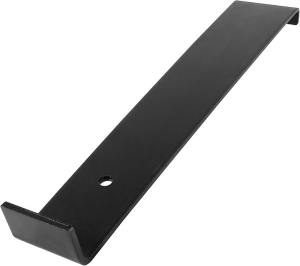
Shop Our DIY Flooring Tools & Supplies



Disclaimer: This page may contain affiliate links. If you click on one of these links and make a purchase, I may receive a small commission at no extra cost to you. I only recommend products and services that I believe will add value to my readers. See our full Affiliate Disclosure at this link.
What It Usually Costs to Replace Carpet with Hardwood
If you hire a professional, the average total runs between $8 and $21 per square foot, depending on the wood type and labor rates in your area.
- Material costs range from about $4 to $15 per square foot, with classic options like oak or maple on the lower end and exotic species like walnut or hickory costing more.
- Labor makes up roughly half (or more) of that total, usually accounting for 50–70% of the overall budget.
- You’ll also pay extra for subfloor prep or carpet removal, which can add $1–$4 per square foot depending on the condition of your floors.
- Other factors that affect price: project size, the finish you choose, and the grade and thickness of the wood.
We skipped all those labor costs by doing the installation ourselves — which is why our total came in around $760 for 143 square feet, instead of several thousand.
Total DIY Cost Breakdown
💡 If we had hired it out, local estimates ranged from $12-$25 per square foot for materials and labor meaning the same 143 sq. ft. would’ve cost $1,800–$3,575.
|
Item |
Product |
Quantity |
Cost |
Notes |
|---|---|---|---|---|
|
Hardwood Flooring |
7 boxes (used 5.5) |
$678 |
Neutral brown tone, 3/4″ solid |
|
|
Underlayment |
2 rolls |
$120 (79¢ per sq foot) |
Moisture + sound barrier |
|
|
Tools |
Pry bar and mallet, flooring nailer (rented) |
– |
$50.00 (rental) |
Owned already or rented |
|
Tools |
1 |
$65 |
Wanted a new blade to prevent tear-outs on our cuts |
|
|
Supplies |
About 1200 |
$0 |
Given to us from a leftover project |
|
|
Finishing |
5 pieces @ 12ft |
$65 |
About $1 per sq ft |
|
|
Total DIY Cost |
≈ $978 |
Labor = free (DIY) |
Day 1: Carpet Removal

The carpet removal was quick — anger is an underrated motivator. It took about 1.5 hours to rip up and toss, then another 3–4 hours to pull staples, remove tack strips, and clean up. We lightly sanded and thoroughly vacuumed the subfloor before installing the new floor.
Day 2: Installing the Hardwood Floors
Step 1: Roll Out the Underlayment
We started by rolling out the Eco Cork Foam Underlayment, and cutting it to fit. It lays flat and creates a nice cushion and sound barrier while keeping moisture out.

Step 2: Lay the First Row
We face nailed the first row and the boards clicked together nicely once tapped into place. Here’s a friendly lesson learned: open several boxes and mix the boards as you go, it helps the tones blend naturally.
Step 3: Nail It Down
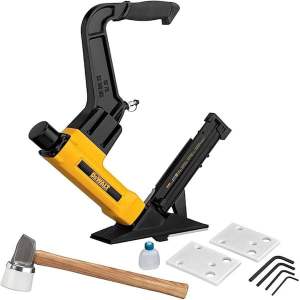
We used a flooring nailer and fastened the boards every 8–10 inches.
Let’s do the math:
143 sq. ft. = roughly 528 boards (3¼” wide planks).
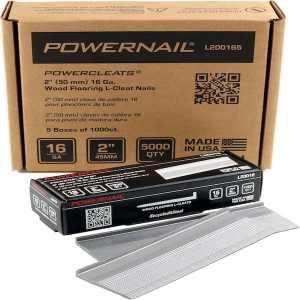
Each board averages 24 inches, so you’ll need about 2–3 fasteners per board → that’s roughly 1,000–1,200 nails total.
It sounds like a lot, but once you get into a rhythm, it moves quickly.
Finishing Touches
We didn’t remove the baseboards — which, honestly, I’m glad about because that’s a headache. Instead, we added quarter round (not real shoe molding) to cover the expansion gaps. Some of those gaps were a little too generous, so the wider quarter round saved us. If you’re dealing with uneven edges or spots where quarter round won’t sit cleanly, I’ve also used peel-and-stick trim as a workaround in tight areas. I talk about it more here: Instatrim review + how I used it.


Final Thoughts

The entire project took just three days, and for less than $1000 total. The American Spirit Saddle Red Oak turned out beautifully — a rich, neutral brown that feels modern and classic at the same time.

Would we do it again? Absolutely. Now I might have to “spill” something over all the carpet in our house.